PHP – Introduction to PHP
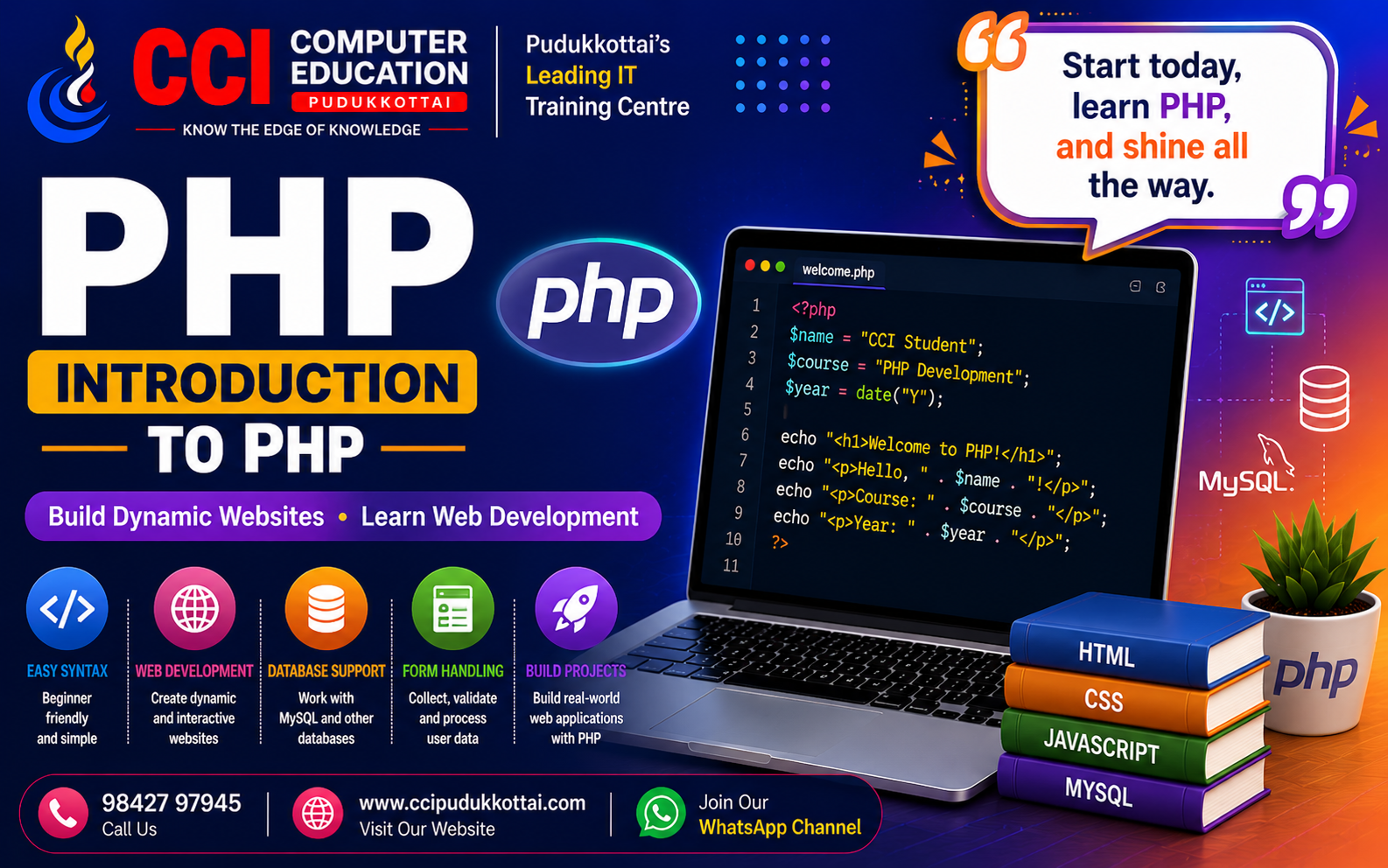
PHP is one of the popular technologies used in web development. It helps developers create dynamic websites and web applications that can interact with users, databases, forms, and other web technologies.
What is PHP?
PHP stands for PHP: Hypertext Preprocessor. It is a server-side scripting language mainly used for web development.
Unlike HTML, which mainly defines the structure of a webpage, PHP can process information on the server and generate dynamic content before sending the result to the user's browser.
How Does PHP Work?
When a user requests a PHP webpage, the web server processes the PHP code. The server then sends the generated HTML output to the browser.
<?php
echo "Welcome to PHP!";
?>
The above PHP program displays: Welcome to PHP!
Why is PHP Used?
- Create dynamic websites
- Process HTML forms
- Connect websites with databases
- Manage user login and registration
- Build web applications
- Process and display information dynamically
PHP and HTML
PHP and HTML are often used together when developing websites. HTML provides the structure of the webpage, while PHP can generate or modify the content dynamically.
<!DOCTYPE html>
<html>
<body>

<h1>
<?php
echo "Welcome to CCI Computer Education";
?>
</h1>

</body>
</html>
Where is PHP Used?
PHP can be used for many types of web applications, including:
- Business websites
- Blog websites
- Student management systems
- Online registration systems
- E-commerce websites
- Content management systems
- Database-driven applications
PHP and Databases
One of the important uses of PHP is working with databases. PHP can be connected with databases such as MySQL to store and retrieve information.
For example, a student management application can use PHP to store student names, courses, marks, attendance, and other information in a database.
Advantages of Learning PHP
- Beginner-friendly syntax
- Useful for web development
- Works well with HTML, CSS, and JavaScript
- Can work with databases
- Suitable for creating dynamic web applications
- Good technology for learning server-side programming
What Should Beginners Learn First?
- HTML basics
- CSS fundamentals
- PHP syntax and variables
- Operators and conditions
- Loops
- Functions
- Forms and user input
- MySQL database connectivity
- CRUD operations
- Small PHP projects
Simple PHP Example
<?php

$name = "CCI Student";

echo "Hello, " . $name . "!";

?>
This simple example stores a student's name in a variable and displays a personalized message.
Learn PHP Through Practical Projects
At CCI Computer Education, Pudukkottai, students can learn programming and web development through simple explanations, practical coding exercises, and project-based learning.
Beginners can start with PHP fundamentals and gradually move toward database connectivity, CRUD operations, authentication, and real-world web applications.
Conclusion
PHP is an important server-side technology for creating dynamic websites and web applications. Learning PHP along with HTML, CSS, JavaScript, and MySQL can give beginners a strong foundation in web development.
Start with simple programs, practice regularly, and gradually build small projects to improve your programming skills.
What's Next?
In our next PHP tutorial, we will explore PHP Variables and Data Types with simple examples.
Call: 98427 97945 | Website: ccipudukkottai.com | WhatsApp Channel: Join Now
Share: Facebook | WhatsApp | Twitter